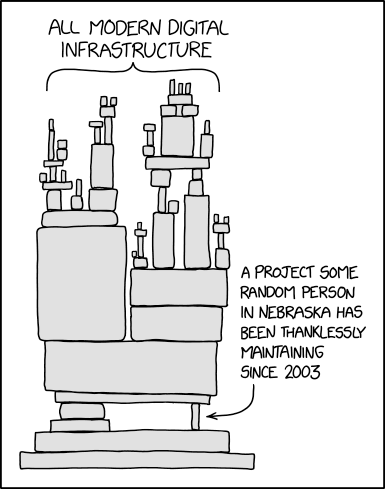
That one precarious block, representing the fragile dependency of the giant infrastructure game of Tetris, gets its name substituted from AWS, Azure, Cloudflare, or whoever may have caused the crippling outage du jour.
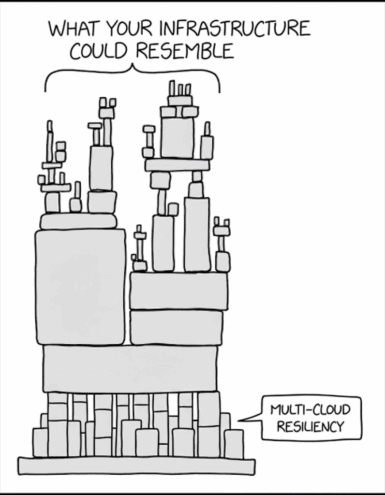
While a simplistic graphical depiction, it is a poignant one for organizations reflecting on their dependencies. Cloud technologies are invaluable to modern organizations for scaling and provisioning, but your infrastructure diagram can quickly start to resemble the meme if you haven’t prioritized a multi-cloud strategy.
Data independence means your organization’s file services and critical data aren’t locked to a single cloud provider’s availability. When one provider experiences an outage, your operations continue uninterrupted. This concept is fundamental to modern cloud disaster recovery planning.
CTERA CTO Aron Brand said it best in his recently published article, “Cloud Quake“:
“Resilience isn’t about trusting AWS, or Azure, or Google, to never fail. It’s about assuming they will fail and still being able to function.
That starts with data independence. If your data lives in one place, controlled by one provider, then you don’t own your uptime – they do.”
The assumption of failure is the premise of successful disaster recovery planning. According to industry research, the average cloud outage costs enterprises approximately $300,000 per hour, with some organizations reporting losses exceeding $1 million during extended incidents. Ensuring your file services infrastructure is multi-cloud is an essential step in protecting business continuity when one of your fundamental supports “gives out.”
What Happens When Your Cloud Provider Fails
With CTERA, multi-cloud supports cross-regional object storage replication that can help you switch on the fly to a functioning bucket. Better yet, for those who have modernized to a Global File System, a CTERA Edge Filer keeps your active data locally cached so you can continue working, with changes queued to sync backup when services are restored.
Did your users lose access to a CTERA Edge Filer because of a connectivity or computer issue? No problem. File access can be provided via the elegant Web UI or auto failover to another CTERA Edge Filer via Microsoft DFS.
Time to Update Your Infrastructure Strategy
It’s time to update that infrastructure meme. With proper multi-cloud resilience strategies in place, your organization can transform from a precarious tower of dependencies into a robust, fault-tolerant architecture that keeps business moving regardless of which cloud provider experiences their next inevitable outage.